Two exercises that show who you married
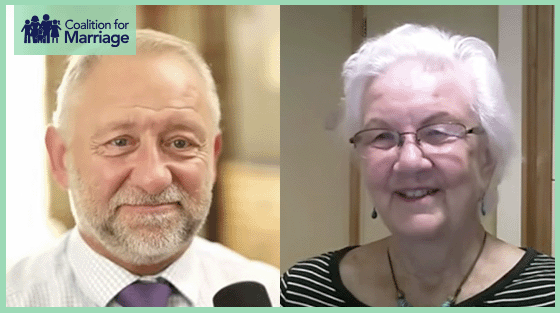
In last Saturday’s interview, Auriel Schluter explained why couples who made covenantal vows so often end up living a contract. This week she gets practical.
“There are two exercises I use with most of my clients”, she says. Both need nothing but a sheet of paper and a pencil, and she works through both on screen in part two of our conversation here.
The first is a lifeline – the shape of your life so far, drawn as a single line rising and falling with how you felt at each stage, and then a look at what was happening at the peaks and the troughs. She uses it because what marked you is often not what marked the person you married. Two people can carry losses of entirely different kinds and spend years assuming otherwise. They cannot share the loss itself, as she puts it, but “they can share how it felt”. It also explains a good deal that couples take personally, when a reaction that belongs to something that happened at thirteen is still being brought into a marriage decades later, she says.
The second maps the family you grew up in, with every relationship in it drawn close, steady, distant or stormy. She uses that one because “this is how I am” is usually how I learned to be in one particular household, and your husband’s or wife’s household may have had quite different dynamics. It is only ever one person’s perception, so the one who drew it owns it and the other asks questions rather than corrects.
What both are really asking is whether you are known. “People want significance and acceptance”, Auriel says, and a marriage is the likeliest place to find both.
Worth watching with your husband or wife rather than on your own, with paper ready, and letting her take you both through it.
C4M works towards better marriages as well as better law. The type of insights Auriel brings are not a private nicety, they are what keeps marriages standing, and standing marriages are the whole point. A married mum and dad, committed for the long run, give the best outcomes on all measures – for men, for women, of course for children, and for society as a whole. The stability underneath that is not a small effect. By the time they turn five, 53% of children of cohabiting parents have seen their parents separate, against 15% of children whose parents are married. Every marriage that comes through a hard year is part of that case.
If your church or organisation would like the marriage course I run, Astonish the World, just reply and I will send the details.