Why is the BBC so afraid of the case for marriage?
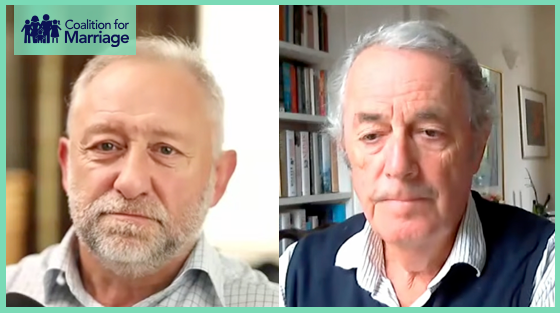
Last Saturday, former BBC journalist Robin Aitken told us how the BBC closes the book on moral issues. In part two of our interview, he explains how that shuts out the case for real marriage. And he reveals that the BBC has invited him “on several occasions to give evidence confidentially to internal BBC inquiries into their impartiality”. Yet “I have never been publicly interviewed about these issues on the BBC or by the BBC”, he says. Meanwhile the bill keeps rising. On 30 October, new figures suggested the licence fee will pass £200 a year within five years. You can watch our discussion here.
Put Robin live on the Today programme, he says, and “what I would have to say would be almost irrefutable from the BBC’s point of view”. A courageous organisation would say, “here’s a critic, one of our own, if you like, homegrown. Let’s have him on and talk about these things.” “Do they ever?” he asks. “Of course they don’t.”
The BBC “would far sooner that these things were not discussed”, he says, because our case is “a central challenge to the whole liberal edifice which dominates this society”.
So the BBC hears its own critic in confidence, but has never publicly interviewed him, he says. That isn’t impartiality. It’s the BBC deciding what the people who pay for it may hear.
What the BBC promotes, Robin says, “becomes as it were the official line”. When David Cameron “misguidedly and quite wrongly decided” to redefine marriage in law, people thought “the law says this is okay, so it must be okay”. Those of us who think about “the health of society generally” when it comes to marriage stand “outside the liberal consensus”, he says. And the BBC “will not allow a challenge” to that consensus.
Yet, the BBC’s own editorial guidelines say that at times it must include opinions some find “unpalatable or offensive”. They add that subjects “that have been legislated upon may also become controversial again”. Marriage is such a subject. By its own rules, the BBC has no business closing the book on marriage.
The BBC is “very dogmatic”, Robin says, “absolutely doctrinaire in its liberalism”, and “you will not shift it”. Yet he still believes there can be change, and so do I. The BBC is losing around 500,000 licence fee payers a year, partly over its impartiality, so it can’t shut us out forever.
When a BBC programme you see or hear shuts out the case for marriage, complain, as Robin advises: “certainly write your letters to the BBC and complain, keep up the pressure”. So here’s a note of how you would do that. The BBC asks for complaints within 30 working days of the broadcast. Name the programme, the channel, the date and the time, and cite sections 2.4.2, 2.4.5 and 2.4.7 of its editorial guidelines. Complain online or by post for a written reply, or by phone on 03700 100 222. The postal address is BBC Complaints, PO Box 10031, MPN2, Lutterworth, LE17 4UE. Ask the BBC to:
- Put the case for marriage on air, from people who make it.
- Hear its critics in public, not only in private inquiries, starting with Robin Aitken on the Today programme.