Civil servants at the BBC and no fair hearing for marriage
We pay for the BBC through the licence fee, and its Charter binds it to be impartial. Yet it closes the book on marriage, and on the plain fact that a man is a man and a woman is a woman. It wants to shape our children’s minds as well. By last Sunday, it had taken material on migration and Net Zero off Bitesize, its schools website, after the Mail on Sunday exposed it as one-sided. A week before, it paused its own scheme putting Government civil servants in its newsroom.
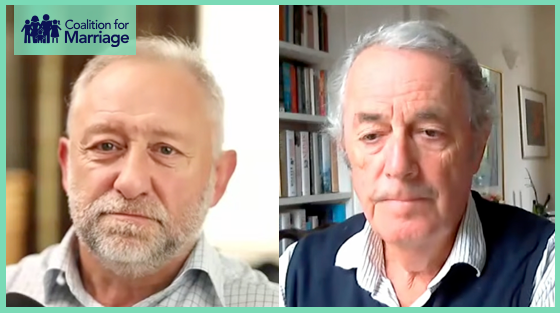
Robin Aitken joined the BBC in the 1970s and spent 25 years there as a journalist, from local radio to the Today programme. Watch our discussion here.
The Telegraph revealed on 17 October that 39 civil servants had worked in the BBC newsroom since 2018, “bylined and credited as members of ‘BBC News’ and ‘BBC Verify’”. Despite the BBC saying they “never make editorial decisions”, one civil servant wrote: “My lines were then quickly pulled into a full article on the main site”. Lines that go straight into BBC News are editorial, whatever the BBC says.
A newsroom bound to be impartial, Robin says, is no place for “civil servants whose job it is, after all, to follow the dictates of the government of the day”. “I would say that the BBC really is a state broadcaster”, he says, and one that “instinctively aligns itself with progressive thought”.
The BBC’s insistence that it’s in no way partisan, he says, is “a complete and utter fiction”. He describes “a cabal of journalists within BBC newsrooms who effectively had a veto on stories touching on the trans issue”.
The BBC’s own style guide says “the concept of a gender identity is contested”, and that it’s “often helpful” to say “a trans woman is a biological male who identifies as a woman”. Yet on 17 October, its report on a young singer on The Voice UK told of “growing up as a transgender woman”.
Its newsroom reports as settled what its own style guide calls contested. And a broadcaster that won’t say what a man and a woman are will never give a fair hearing to marriage, which rests on both.
But already twice this month, the BBC has backed down once exposed. “For most people the idea that we can change our gender at will is a step too far”, Robin says. And the Government says it will set out its decisions on the next Charter “by the end of the year”.
We live in a democracy, and all it takes for the tide to turn is for enough of us who believe in common sense to speak out. It’s as simple as that.
Robin’s advice is to tell your MP that “the BBC proclaims itself to be impartial, but on many moral issues, the BBC closes the book on opposition to the status quo”. You can write before the Government decides. Enter your postcode at WriteToThem.com and ask your MP to press the Culture Secretary, Lisa Nandy, to write into the next Charter:
- A fair hearing for the case for marriage, on BBC News and on Bitesize, the BBC’s schools website.
- Sex reported as fact, and gender identity as the contested concept the BBC’s own style guide calls it.
- No Government civil servants in BBC newsrooms, ever again.
Remember to use your own words so you’re not ignored.
Marriage, the gold standard for children and for society, deserves a fair hearing from the broadcaster we all pay for. Do watch Robin’s interview and pass it on. Taking this fight to Parliament before the Charter is written is the work your support makes possible.