Is marriage a covenant or a contract? The Government thinks the latter
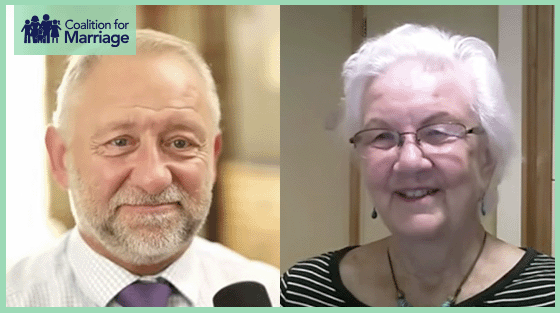
I have run marriage courses for many happy couples, but a small number, who meant every word of their vows, end up living like strangers. Auriel Schluter thinks the trouble starts with what those couples believed they were entering. They come to her having been married in church, with vows she describes as “really covenantal”. Then she listens to how they talk to one another. “I think they’re not actually living a covenantal marriage,” she says. “They’re living what I’d call a contract marriage.” Saying it out loud makes them sit up, because they “took vows that maybe they didn’t understand at the time”. This is the first of two conversations with Auriel and you can watch it here. In the video, she puts the two approaches side by side on screen – it’s worth sitting down with your husband or wife and asking together which marriage you are living.
The difference is not a technicality. A contract, Auriel tells us, starts with “I will do this and I expect you to do that”, becomes “I will do this if you do that”, and is “based almost on mutual distrust”. It is about “what I will do for you not who I’m going to be”. A covenant runs the other way, she explains. It is “sacrificial action. I’ll do it no matter what you do.” It “seeks to give and it’s for life”. And for Christians, she says, it holds three parties rather than two. “A covenant is based on unconditional love between God, a husband and wife.” And for those couples, she goes on, “we can’t keep a covenant on our own”. Nor is this only for churchgoers. Plenty of couples, she finds – certainly of the older generation – work at the marriage decades later because they made those vows.
All of which sounds fine until the day it costs something. “We will disappoint each other,” she says. Where there is a covenant, “that gives us a pathway back”.
I put it more bluntly on my own courses. You are not looking for a finished statue of David but for a lump of marble that might become one, and that work takes a lifetime. Auriel is honest about the risk in it. You cannot know what is coming – “You have no idea what the journey is, so you are trusting that person whatever happens”.
And importantly, Auriel points out that a covenant is made to each other and not to the children. Build a marriage on the children alone and, as she warns, sometimes it falls apart once they have gone. And none of it stays private. You are raising the grandfathers and grandmothers of the future, and thereby, your marriage will influence generations you will never meet.
This is urgent beyond any one marriage. The Government’s weddings consultation would reduce the words a couple must say to what it calls “a short statement of contract”, with no promise of faithfulness or permanence in it at all. The joint C4M and CitizenGO petition asks the Justice Secretary for a real vow in law, and more than 11,000 have signed so far. The state is drafting the very contract marriage Auriel watches couples stumble into.
Part two of our interview follows next Saturday – with simple exercises she gives couples to understand more about each other. If your church or organisation would like the marriage or pre-marriage programme I run, Astonish the World, just reply and I will send the details.