WHILE FAMILIES CRUMBLE THIS EASTER, THE CHURCH ARGUES WITH ITSELF
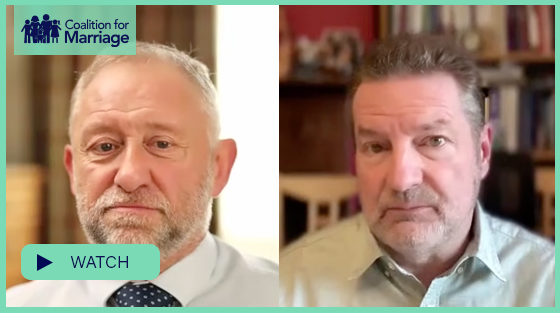
I recently sat down with Rev Dr Ian Paul – theologian, General Synod member, and former member of the Archbishops’ Council – to discuss what happened at the Church of England’s February Synod. Please watch the full conversation here.
Nine years and at least £1.6 million (excluding diocesan costs): that is what the Church of England spent on Living in Love and Faith, the programme launched in 2017 to explore whether the Church should bless same-sex unions. February’s General Synod voted 252 to 132 to bring it to an end. The doctrine of marriage has not changed by a single word.
Ian describes the process as, a “money-wasting debate which I think hasn’t really got us anywhere”. And while the Church was consumed by this, it issued no formal statement on fatherlessness, took no policy position on falling marriage rates, and when its own Love Matters report finally addressed family life in 2023, it declined to distinguish between married and cohabiting families in child outcomes.
The Church – established by law to speak for the nation on marriage – spent nine years arguing about its own teaching instead of defending marriage in public life.
The process may have ended, but the problems it created have not. The Prayers of Love and Faith (PLF), commended but never authorised by the bishops in December 2023, remain in use. They can only be used within existing services, not as standalone ceremonies, and must not resemble Holy Matrimony. Ian warns: if prayers are used in a way “which looks like a quasi-marriage then I’m afraid that is not legal and it cannot be done”.
Yet at York Minster in 2024, a service for a same-sex couple used the PLF, which raised serious compliance concerns, while no public action is known to have followed.
Meanwhile, two new advisory groups have been established: one to explore standalone blessing services under canon law, the other to advise on clergy in same-sex marriages. The theologian Martin Davie has called this ‘LLF 2.0’ and warns that “the LLF juggernaut will thus continue to move forward, albeit in a new guise”. Both groups should report to the new Synod by 2028.
Ian describes a shift in tone among those defending the Church’s historic teaching: “We’re much less defensive, more generous, more empathetic. The tone was very positive but it was also very clear.” With General Synod elections this year, his message is simple: if you are in the Church of England, get involved. Stand for your local deanery synod this spring, or encourage someone who will.
This Easter, Coalition for Marriage will do what the Church of England’s leadership would not: make the case for real marriage without apology. Marriage – the lifelong union of one man and one woman – is worth championing.