The engagement they don’t want you to know about...
Three years. Seventeen court appearances. A possible five-month prison sentence and a 5,000 euro fine. All for sitting on a Maltese television sofa and saying he was no longer gay.
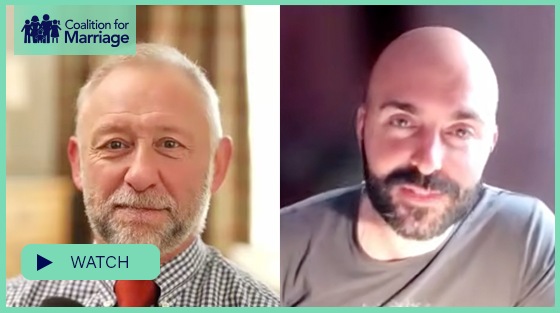
Today, Matthew Grech is engaged to be married to a woman called Holly. He joined me from his church in Malta to tell the story behind that engagement – and what it felt like, on 4 March 2026, to walk out of the Court of Magistrates in Valletta a free man. Watch the full interview here.
Matthew was a successful R&B singer in Malta as a teenager. He lived a secret gay life in London until, at nineteen, he attended a church where he came to faith and found a community where he was loved: “finding a family and a sense of belonging was amazing for me”.
Years later, sharing his story on a Maltese current affairs programme, Matthew was prosecuted under Malta’s law against “advertising” so-called conversion practices. So were the two journalists who interviewed him. These so-called conversion therapy bans are a live issue in the UK. Earlier this week, an Equalities Minister confirmed the Government “will publish draft legislation as soon as possible”.
In the judgment that acquitted Matthew, Magistrate Monica Vella said: “The greatest mistake one can make, is to automatically jump to the conclusion that the law, as promulgated, exists solely for the protection of only one segment of our society.” Christian Concern supported Matthew throughout the prosecution. Read their analysis of the verdict here.
But the verdict is not the whole story. “The process itself was the punishment,” Matthew tells me. “If we had freedom of speech, we would not have had to be in court for three years and have this shadow over our heads.”
This is what such laws do. They punish the innocent. They have a chilling effect on speech. And they duplicate offences that are already on the statute book.
The law of England and Wales already covers any genuine abuse. The previous Government’s own 2021 consultation said so, listing the Sexual Offences Act 2003, the Criminal Justice Act 1988 and the Offences Against the Person Act 1861 among the statutes that already cover such conduct. Read the consultation here.
Real marriage is unique. It is the lifelong union of one man and one woman, the gold standard for children and for society. The 2013 redefinition stripped that uniqueness from the law – and Malta’s prosecution of Matthew is part of what inevitably follows. Coalition for Marriage will not stop campaigning until British law once again recognises the unique union that forms the stabilising bedrock of society.