What if thousands of us asked Andy Burnham to drop this?
So many of you answered the Government’s cohabitation consultation before it closed on 14 August – thank you. Since then, we’ve heard nothing – no response, no timetable. But the ground has shifted. These plans were drawn up before Andy Burnham reached Downing Street – and the new Prime Minister can be persuaded to drop them.
A reminder of what’s on the table. Live together for three years, or share a child (not necessarily your own), and the state would hand you the money side of marriage – a claim on the other partner’s savings, pensions, property and income, and inheritance by default. The consultation paper leaned on Labour’s manifesto promise to strengthen protections for women in cohabiting couples – but nobody ever promised marriage by auto-enrolment, which could well provide the opposite for many women.
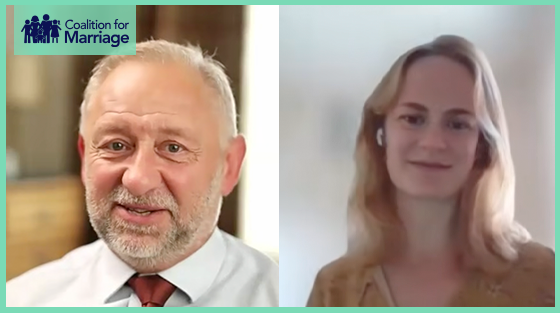
Finland ran the nearest experiment there is – a narrower scheme, without the automatic inheritance. Sophia Worringer of The Centre for Social Justice walks me through its most recent report on this subject in our conversation this week. Within seven years the rate at which women married for the first time ran 23 per cent below where it was heading – measured against neighbouring countries that never passed the law. Fertility fell too – 21 per cent below where it was heading by 2018. And there was no offsetting gain in stability – cohabiting homes grew less stable, not more. Watch here.
Andy Burnham is on record saying “I’m not neutral about marriage”. In a 2011 interview, he said his test is children growing up in “a true, loving, stable relationship in the heart of a family home”, married or not. A man who wants stable homes for children has every reason to look hard at what Finland found – fewer marriages, and no added stability. Meanwhile, a married mum and dad, committed for the long run, remains the surest way a child gets that stable home and the increased chance of success that follows. If stability is his test, marriage passes it – and he can be persuaded, if enough of us ask.
So, will you join me and be one of the thousands to ask him? There are two routes. This short online form takes up to 1,000 characters, around 150 words. Or you can write by post to The Rt Hon Andy Burnham MP, Prime Minister, 10 Downing Street, London SW1A 2AA. Your own words carry more weight than identical letters that are often treated as one response, though every one is logged. To help, here are a few opening suggestions to start from. Choose one or two and make them your own – then top and tail with “Dear Prime Minister” and your name and town.
- On choice – The law should not attach marriage-style claims to couples who never chose them, nor make them sign a legal document to escape. Couples who want the legal ties of marriage can marry, or make a will.
- On the evidence – Finland tried a narrower version of this in 2011. Since then, marriage rates fell well below where they were heading, and cohabiting homes became less stable, not more. Please do not repeat that mistake here.
- On children – A married mum and dad give children the most stable start there is. Rather than blurring what marriage means, please put the Government’s energy into promoting it.
- To the man himself – You once said you were not neutral about marriage. Nor am I. Please show it – drop these proposals, and back the institution that gives children a stable home.
In our conversation, Sophia says these plans need “a pause, a rethink, and a proper scrutiny of what the impact could be”. A full postbag is how a new Prime Minister hears that. Let’s fill it. There is time for this Government to think again – and every reason to hope it will. And when you’ve done it, sit back and watch my discussion with Sophia.