They want marriage supporters to be unemployable
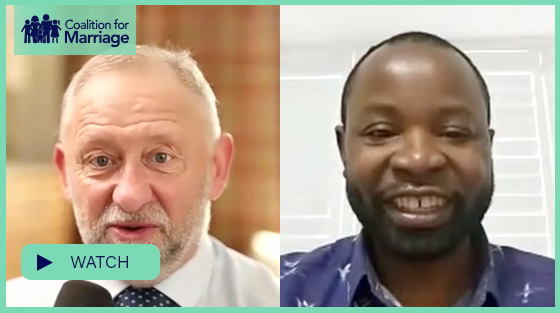
Felix Ngole has been fighting for over ten years. His offence? A Facebook post saying he believes marriage is between a man and a woman. I sat down with Felix again this week to hear where his landmark case stands – and what he told me should concern every one of us. Watch the full interview here.
In 2022, mental health charity Touchstone Leeds offered Ngole a social work post at Wakefield Hospital. He scored the highest marks of any candidate on their equality and diversity assessment. Weeks later, a senior figure discovered his beliefs online and withdrew the offer without a word. A second interview followed, but Touchstone ultimately refused to reinstate the post.
In February this year, the Employment Appeal Tribunal ruled that withdrawing the offer was direct discrimination. This builds on the Court of Appeal’s ruling in Higgs v Farmor’s School.
But key questions remain unresolved – above all, whether an employer can demand “assurances” about a job applicant’s conduct simply because it discovers they hold biblical beliefs about marriage. Ngole and the Christian Legal Centre intend to take those questions to the Court of Appeal.
“They’re not targeting me for hating anyone or for harming anyone”, Ngole says. It’s because “I believe in the Bible”.
What makes the case more troubling still is Touchstone’s response to the finding that it had discriminated. “It’s almost like it’s a badge of honour”, Ngole says. “We discriminated against him because how could he believe that God created us male and female?”
He is far from alone. The Evangelical Alliance’s Confident Faith, Contested Culture report, released this week, found that nearly a quarter of evangelical Christians feel hesitant to talk about their faith at work. Some 88% say practising their faith has become harder or stayed the same over the past five years. The researchers describe “a widening gap between formal freedom and lived confidence”.
Yet Ngole presses on. “If it means that I have to go through more pain just to make sure that somebody else doesn’t go through the same thing”, he says, “I think that would be worthwhile”.
The law is shifting. The courage is coming from people like Felix. But the fight is far from over – because marriage, the lifelong union of one man and one woman, is not an opinion to be screened out of public life. It is the bedrock on which families and communities stand. That is what Coalition for Marriage is here to defend – and Felix Ngole’s decade of courage is proof of why that defence is still needed.