Scotland’s sex ed: the world’s most extreme?
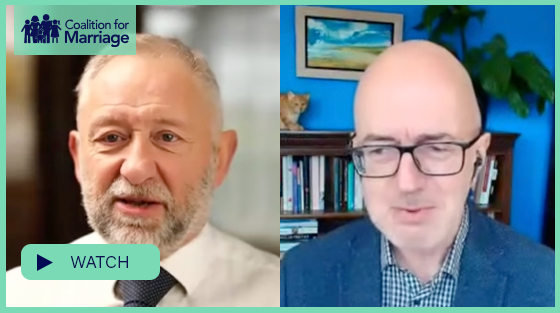
Scotland has just published new statutory guidance on what every child in its schools must be taught about sex, relationships and identity – from nursery age. I sat down with Richard Lucas, leader of the Scottish Family Party and a former boarding school teacher with eight years’ experience, to go through it line by line. Watch the full conversation here.
The guidance begins with an honest diagnosis: teenage pregnancy is up, abortions among young people are rising, STI rates are climbing, and condom use is falling. The document itself acknowledges a normalisation of aggressive acts in young people’s sexual relationships. You might expect that to prompt a rethink. It doesn’t. Scotland’s response is more of the same, and if things are getting worse, that only shows the programme must go further.
Richard points out that Professor David Paton of Nottingham University Business School has produced peer-reviewed research finding that laws mandating sex education are associated with higher rates of teenage fertility, not lower. A Cochrane Review – the gold standard of evidence-based medicine, examining actual pregnancy and STI outcomes across more than 55,000 participants – concluded that sex education programmes alone “probably have no effect on the number of young people infected with HIV”, other STIs or the number of pregnancies. This is not an argument for better-designed programmes. It is the most rigorous form of evidence synthesis available, and its verdict is that the entire premise of Scotland’s approach is unsupported by the evidence. An earlier draft of Scotland’s guidance claimed its approach results in delayed sexual activity. That line has been quietly dropped from the final version.
On parental withdrawal, the guidance sounds reassuring. Parents’ views “should be respected”. Read further and the picture changes sharply. Richard recounts a case reported to him of a deputy head, who was legally prohibited from telling parents who met with him that their daughter had had an abortion – despite them being desperately worried about their daughter’s state of mind. The opt-out right applies only to specific sexual health content. It does not apply to learning about ‘diverse families’, ‘tackling homophobia’, or LGBT-inclusive education, which is now embedded across every subject from nursery to school leaving age. By classifying this content as equality and anti-bullying learning rather than sexual health, the Scottish Government has structured the guidance so that the parental opt-out simply cannot reach it. Another family, Richard highlights, withdrew their 13-year-old from sex education. The teacher’s response was to ask the girl whether she would like the same content taught to her privately in break time.
The guidance makes no adjustment for the UK Supreme Court’s April 2025 ruling that “man”, “woman”, and “sex” in the Equality Act refer to biological sex. Scotland updated its school toilet policy in September 2025 following a successful Court of Session challenge but the RSHP guidance has not been updated to reflect the ruling’s implications for how sex and gender are taught. Richard says that John Swinney, Scotland’s First Minister, was at the forefront of introducing LGBT-inclusive education when he served as Education Secretary, and that not a single MSP opposed it when it was first introduced.
This matters beyond Scotland. The same logic of embedding content beyond the reach of parental opt-out is advancing in England and Wales too. This is the first of two conversations with Richard. In the second, we go inside the actual materials used in Scottish classrooms. Some of what Richard shares is deeply disturbing, and parents across the UK need to know about it.
Real marriage is not just one lifestyle choice among many. It is the institution in which the interests of children and the commitments of their parents meet – the foundation that gives children the strongest possible start in life. What is taught in classrooms today shapes the marriages, families, and communities of tomorrow. That is why this matters to every C4M supporter, wherever you live in the UK.