The country that survived the Luftwaffe but can't survive itself
Malta survived the Roman conquest, the Arab invasions, and the most sustained aerial bombardment of the Second World War. Now, a group of Maltese families fear the thing that finally defeats their country may come from within.
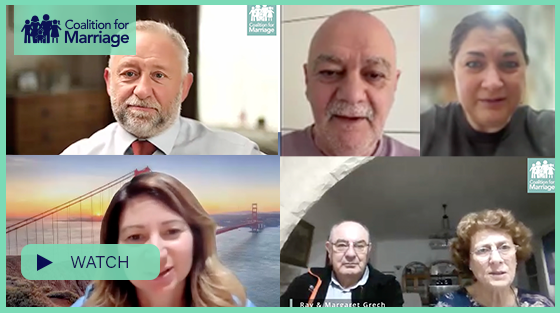
I sat down recently with five members of Our Family Foundations, a new Maltese organisation defending the family and parental rights. Among them: Margaret Grech, the foundation’s President, and her husband, Ray, who is Vice President; Rebecca Dalli Gonzi, its Secretary General and a university department head; Pastor Edwin Caruana, who planted the first Maltese evangelical church in 1983; and Sarah Sandoey, who leads outreach to parents. I’d encourage you to watch the full conversation on our YouTube channel.
Malta’s story reads like a cautionary tale compressed into a single generation. Until 2011, the country did not even permit divorce. Then, in a referendum, 54% voted to legalise it. What followed came fast. Pastor Edwin describes the aftermath bluntly: “The Catholic Church lost its voice.” Since the vote, it has “hesitated speaking out against anything”.
Within six years, Malta had banned conversion therapy (the first EU country to do so), legalised same-sex marriage, and introduced some of the most far-reaching gender identity legislation in the world. Since 2016, it has topped ILGA-Europe’s Rainbow Index every single year. Edwin’s explanation is direct. The Government saw its moment: “It’s our time now. Let’s go forward with our agenda because the church is no longer able to oppose us.”
The demographic consequences are stark. Malta’s total fertility rate stood at 1.06 in 2023 - the lowest in the entire European Union. Central Bank projections suggest the native Maltese population could fall from around 405,000 today to roughly 275,000 by 2075. Ray recalls a Malta where families had “11 and 12 children”. Instead, grandparents now watch as “the Maltese society is gradually fizzling away”.
And the word marriage itself is losing its hold. Among Edwin’s own six nieces and nephews, all with partners and children, not one is married. “The word marriage is out of fashion”, says Ray.
It was what their grandchildren were being taught at school that lit the fuse. Our Family Foundations was born from that urgency, with a clear aim: to ensure “parents or legal guardians… remain the primary authority over their children, over their education, over their influence”. When the foundation ran sessions for young people, the response was telling: children opened up because they finally could. As Margaret explains, “the teacher told them you’re not allowed to go and speak to your parents about these things”.
Strong families do not need big governments. They pass on customs and cultures from one generation to the next. They take care of their own. When marriage is hollowed out – when it becomes just one option among many – the consequences are not abstract. They show up in collapsing birth rates, fractured families, and children who feel they cannot talk to their own parents. That is why C4M’s work of championing marriage – the lifelong union of one man and one woman – matters: in Malta, and here at home.