BBC misleading the public on conversion therapy
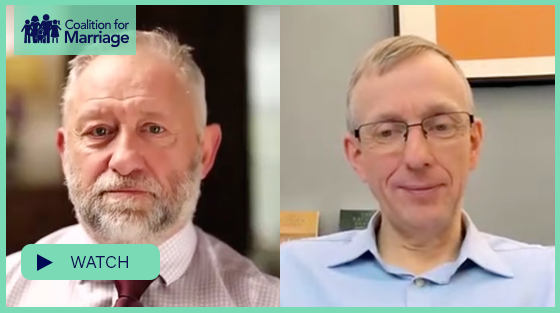
In part two of my recent interview with Tim Dieppe, Head of Public Policy at Christian Concern, we unpacked the BBC’s ongoing slanted coverage amid the push for a ‘conversion therapy’ ban. The focus was simple: what is really being proposed, and who gets caught in the net. Watch the full 7 minute video here - and pass it on!
The trigger for the discussion was Christian Concern’s recent critique of BBC coverage and their earlier related analysis.
Tim’s contention is that the BBC is using a true historic abuse story to soften the public up for a new criminal law, while avoiding clarity about what would actually be policed. The example discussed was a BBC article from 2 months ago, built around Electric Shock Aversion Therapy on the NHS in 1965-1973.
Tim underlined the key facts: “it took place on the NHS not in churches”. He then added that the practices discussed are “illegal anyway”.
That is the pivot. If the conduct being highlighted is already illegal, the key question is the one Tim says rarely gets answered: “What exactly do you want to ban that isn’t already illegal?”
His answer was blunt. The target becomes speech. “Well, it actually comes down to certain types of consensual conversations”, he said. He included pastoral support in the same category: “Consensual prayer as well. And that would be illegal.”
Put that into real life: a pastor praying with someone who asks for help, a parent talking to a teenager, or a counsellor exploring feelings and choices with a client. That is what “consensual conversations” means.
Then came the contradiction Tim thinks is being hidden in plain sight. While campaigners demand a speech ban in the name of stopping ‘conversion therapy’, he pointed to what is happening in medicine: “they are proposing to carry out a clinical trial of puberty blocker drugs on young children. Well, if that isn’t conversion therapy, what is that?”
So the public is asked to back a new criminal law using historic abuse, while the live proposal is to police peaceful words between adults.
This is not a one-off. The BBC has had to issue clarifications and face upheld complaints in this territory:
- Clarification added after complaint, including correcting a claim that a conversion therapy Bill had already been published.
- Complaint upheld on impartiality and repeated suicide references in a puberty blockers article.
- BBC Executive Complaints Unit upholds concerns about errors in a gender transitioning piece (reported by The Spectator).
- Tavistock whistleblower claims the BBC has been captured by activists (reported by The Telegraph).
- BBC Executive Complaints Unit upheld complaints against a presenter after she replaced “pregnant people” with “women”, ruling it could be interpreted as taking a side in a contested debate (reported by The Guardian).
This matters for marriage because the same freedom being targeted here is the freedom to speak plainly about sex, love, self-control, and the meaning of marriage, in churches, in families, and in ordinary counselling rooms. If “consensual conversations” become unlawful, the cultural space for man-woman marriage shrinks fast. If speech about sexual difference is treated as harm, the man-woman basis of marriage is treated as prejudice by default.
C4M exists to champion the original and authentic definition of marriage, as the union of one man and one woman, as the gold standard for children and society. That includes defending the freedom, protected in UK law, to speak and advocate for that view in public life without being smeared as harmful or extreme. When broadcasters and lawmakers blur abuse with ordinary speech, that freedom is what gets squeezed first.