Rabbi talks sense on marriage as Government plans replacement
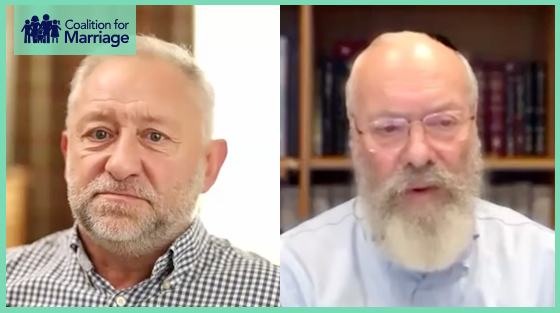
Most of the couples Rabbi Shlomo Levin MBE married were already living together. When he asked them what marrying would change, their answers varied, but they almost always came back to one idea – commitment.
He led South Hampstead United Synagogue in London for forty years, and was a study partner of the late Rabbi Jonathan Sacks. I spoke to him to find out what those couples taught him. You can watch the first part of our conversation here:
The couples told him marriage was “a step change in the relationship”, bringing “a new level of commitment, and of obligation, and of responsibility” and the sense that “I can no longer walk away from this easily”. The change came, he says, in the act of standing together under the wedding canopy and exchanging vows. Marriage is “the only word in society that actually captures” that kind of permanent commitment, which is why, he says, other forms of relationship want “to borrow the word”. But when I asked whether the union of a man and a woman needs its own distinct title, he said, “I do agree with that”.
Marriage works. On Wednesday, the Office for National Statistics (ONS) reported that only 16.3 per cent of couples who married in 2015 had divorced by their tenth anniversary. But family breakdown hasn’t reduced with the decline in divorce rates. Over three decades in which divorce has fallen, the number of lone-parent families has doubled, because couples who live together without marrying are far more likely to separate. Cohabiting parents are 3.4 times more likely to split up than married parents, at every level of income, and, of course, none of those break-ups appears in divorce figures.
The obvious objection is that steadier couples are simply more likely to marry. But in June, the Marriage Foundation reworked a study of 3,324 couples followed for up to fourteen years, and found that “marriage accounts for half or more of the gap” in couples splitting up, and that being married “substantially increases the chances that parents stay together” whatever their background. It says the findings fit the view that marriage works as “a commitment device”.
That commitment matters most for children. Family, Rabbi Levin says, is the foundation of the whole of civilisation, because it’s where “the show and tell of parents loving each other” teaches children what a strong relationship looks like. When relationships break down, he says, the damage for the couple and “most importantly for their children is unspeakable”.
Yet the Government is now deciding whether couples who have lived together for three years, or who live together and share a child, should have financial claims on each other when they part. The scheme “would apply automatically”, unless both agree to opt out. The paper even claims it preserves “the distinct and unique status of marriage”! The couples Rabbi Levin married chose commitment and made it public, but this scheme would impose marriage-like obligations on couples who chose not to. You don’t uphold marriage by building its replacement.
At C4M, we know what those couples knew. Marriage, the voluntary, exclusive, lifelong union of one man and one woman, is a commitment living together doesn’t make, and children do best when their own mother and father have made that commitment to each other. We call on the Government to drop the scheme and to put marriage back at the heart of family policy.
In part two next week, Rabbi Levin turns to fathers. Do watch the first part here and send it to a couple you know who live together and wonder whether marrying would change anything. Rabbi Levin’s own weekly reflections are here.