Marriage and the October deadline in the CofE
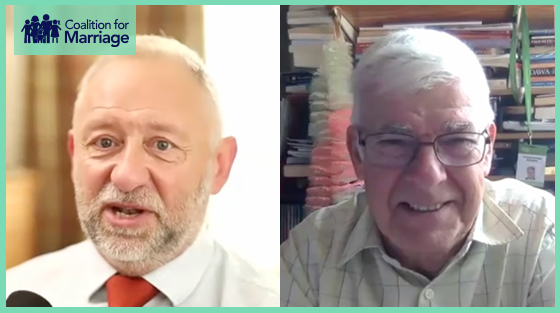
In the second part of my interview with Canon Dr Chris Sugden, I asked him to explain what actually happened in July when the Church of England came close to saying that same-sex relationships were allowed. He explains that while its doctrine of marriage didn’t change, the principle underneath it nearly did. You can watch our conversation here.
What Synod voted on was not the motion first tabled. That one asked Synod to affirm there are no fundamental objections to “committed, faithful, intimate same-sex relationships”, one “entirely compatible with Christian discipleship”, or so it claimed. Synod then carried an amendment replacing “no fundamental objections” with something milder in sound: that the church “delight in the lives and ministries of LGBTQIA+ people” and “recognise a legitimate range of theological perspectives”, covering views that affirm and views that reject.
That was the more dangerous proposition, not the less, he says. If the church had said both answers were allowed, it would have undermined the teaching around marriage. As it turned out, the decision maintained the doctrinal position of marriage as the union of one man and one woman.
The motion fell in the House of Bishops alone: eleven for, 14 against and four abstaining. Clergy voted for it 93 to 79 and laity 101 to 83, resulting in a total Synod vote of 205 for and 176 against the motion. However, since Synod votes by houses, the bishops held it. Had the four abstainers voted the other way, they would have lost.
“I think the orthodox bishops knew very well what they were doing”, Chris says. “They did it successfully.” We can “breathe a sigh of relief”, and “we should thank those who did stand firm and encourage them to continue so to do”.
Chris suggests that although Living in Love and Faith may have ended as a process, the issue has certainly not ended. That same House has commissioned a working group to prepare what comes next, reporting to the Synod being elected now. One of its tasks is changing canon law to allow the clergy to enter same-sex civil marriages. This needs only a simple majority in each of the three houses, in which two voted for in July’s motion.
In October, new members will be elected to General Synod, gaining a say on the Church’s policy on marriage for years to come. So, October matters more than July did. Voting closes 12 October by post and 13 October online, and the result declared on 19 October. If you are in the CofE, it’s important to be as involved as you can be, including voting.
To those worn down where they are, Chris says the answer is not to leave the CofE. If anyone should leave, it is those in authority who no longer hold the church’s teaching: “They should be the ones who leave.” He added: “Go and set up your own church. That’s fine. No one’s stopping you doing that. But don’t take over ours.” He concluded by saying: “They want to make so much noise that we give up… so, we leave. That’s music to their ears.”
His counsel is practical. Find orthodox friends elsewhere – “we’re not alone in this battle” – visit once a month for encouragement, then go back and witness where you are. “Don’t give up.” And do the thing the faithful have too often left undone while the other side did it well. Organise.
In July, the line was held by three bishops. Whether it will hold when that working group publishes its report depends on how many of us are still there to hold it. Do watch Chris’ conversation and send it to someone who needs the encouragement.