ONS now counts fathers but the state still discounts them
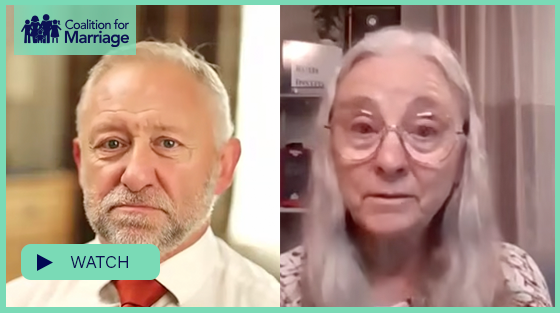
‘Marriage’ is the term that defines what only a man and a woman can do, and it remains the gold standard for a child because it is the arrangement most likely to keep that child’s mother and father together. This June, for the first time in almost two centuries of fertility data, the Office for National Statistics counted fathers as well as mothers. Yet, as Father’s Day approaches, a boy in Britain is now more likely to grow up with a smartphone than with a father at home. To ask how fathers became so easy to do without, I spoke with Dr Jennifer Roback Morse, an economist and the founder of The Ruth Institute in the United States. You can watch our conversation here.
This June, while corporations drape themselves in rainbow flags, Morse has done the braver thing and declared a month celebrating fathers and masculinity instead. “Men are good”, she says, “we need men”. A good man, she argues, uses “your power and your strength and your authority for the benefit of the weak and the poor and the helpless”. That is the masculinity a child needs at home – and marriage is a child’s best chance of keeping it.
Here is her warning, and it is the heart of C4M’s argument around the definition of marriage. “If you redefine marriage, you will redefine parenthood, there’s no getting around that”, she says. Two people of the same sex cannot conceive a child together, so once that union is called marriage in law, the words mother and father must be made to mean nothing in particular – interchangeable, and optional. Parenthood stops being a fact the state records and becomes “whatever the state says it is”, which Morse calls “a massive transfer of power from civil society to the state”. Her Institute predicted this very thing years ago, in a leaflet you can read and share.
Britain has been proving her right for years. In 2008, Parliament struck a child’s need for a father out of our fertility law, putting “supportive parenting” in its place. Now, a Bill before Parliament would go further and repeal the presumption of parental involvement altogether, the legal signal that a child benefits from both parents. The minister announcing it put the new thinking plainly: “Being a parent is a privilege not a right”. Hollow out marriage and the father goes first, the mother follows, and the child is left with whatever the state allows.
This is why we defend real marriage, and why we will not stop. Marriage is the lifelong commitment of a mother and a father to each other and to their child, made before the state is ever in the room. It is not a private celebration but a child’s best chance of both parents for life. Take it away and you free no one – you simply hand officials the power to decide who counts as a parent.
There is hope. In the United States, support for same-sex ‘marriage’ is sliding – down to 65 per cent, six points below its peak, and among Republicans down to 37 per cent from 55. Many are concluding that redefining marriage did not deliver what was promised. “Human nature is pretty much universal”, Morse says. “Women love their babies”, and men long “to protect the people that they love”. Opinion turned in the US because ordinary people refused to stay silent, and it can turn here too.
This Father’s Day, watch Dr Morse and share the interview with a father, a son, or a friend who needs to see it.