The trans steamroller goes up a gear...
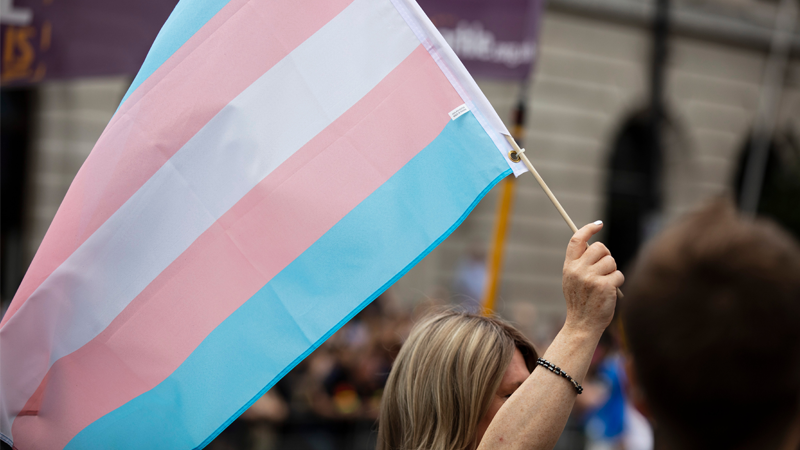
I haven’t written to you about the trans question for a while. You might have thought the Supreme Court had settled it in April last year, when it ruled that “sex”, “man” and “woman” in the Equality Act mean “biological and not certificated sex”. It would seem not. The two words that the definition of real marriage rests on – ‘man’ and ‘woman’ – are still very much under attack.
This month the Trades Union Congress voted that “the law must be changed” and called for “a process of gender self-declaration in the UK”. The unions aren’t alone. Civil servants in one department are petitioning against single-sex lavatories. A Manchester hospital trust puts trans-identifying patients on wards by how they present themselves, under a policy approved until 2028. And at least three police forces have given officers male and female warrant cards, “so they can identify as a man one day and a woman the next”. On Wednesday Sandie Peggie’s case against her own union opens in Dundee, after they refused to back her objections to being made to share a changing room with men.
How is this possible, you might well ask. The Supreme Court restored the meaning of “man” and “woman” in the Equality Act, and nowhere else. It said its job was not “to define the meaning of the word ‘woman’ other than when it is used in the provisions of the EA 2010”. That Act is now the one place where a court has said the word means what it says, because in 2013 Parliament took “man” and “woman” out of the other place – marriage law. Until then a marriage was void if “the parties are not respectively male and female”. So the Equality Act is what’s left, and that’s the law the TUC wants changed. The rest are behaving as if it already had been.
Behind the noise, ministers have published a draft Conversion Practices Bill that writes “transgender identity” into criminal law. It doesn’t stop with adults. The same push has reached the children, and in three key instances.
First, the puberty blocker trial. Since 1 August a National Health Service trial has been free to recruit girls as young as eleven, though the medicines regulator had asked for a minimum age of fourteen. No child should be given them, in a trial or out of one. Second, in schools, the Department for Education’s new safeguarding guidance tells a school that where a child confides about their gender but asks for no change “there is no reason to break any confidence unless there is a related safeguarding risk”. So the school needn’t tell parents. Third, the Equality and Human Rights Commission’s own draft schools guidance says that sending a boy who says he’s a girl to the boys’ changing room is “likely to be unlawful indirect gender reassignment discrimination”, and suggests instead a lockable room that “might be a staff changing room or a mixed-sex accessible bathroom”. Informing parents again appears nowhere.
That draft is still open for consultation, until 11.59pm on Wednesday 30 September. It wants to hear from parents, carers, teachers, heads, governors and those who support schools. Anyone over sixteen may respond, though you must read the draft first. If you’re a parent, or you work in or with a school, the drafts and the three country based surveys here. As usual, use the boxes to write in your own words. Give the changing-room example, and say that the school should tell his parents. Say sex means sex at birth in changing rooms, as the Supreme Court’s definition says it does.
But take heart, the tide is turning and people are pushing back. Last year, YouGov found three in four Britons against puberty blockers for under-sixteens, and 63 per cent against making a change of legal sex any easier. Private prescriptions of blockers to under-eighteens are now banned, and this year NHS England wrote into its own children’s service that “medical intervention is not the standard approach”. In America more than forty hospitals have pulled back from these treatments since January last year. This month Wales halted every surgery referral from its gender clinic and a police force dropped a policy that made women share changing rooms with trans officers, after a legal threat. What you read earlier is not a movement advancing. It’s the rage of something that knows it’s losing. Hold the line a little longer, and take ten minutes on that consultation. Thank you for all you make possible.