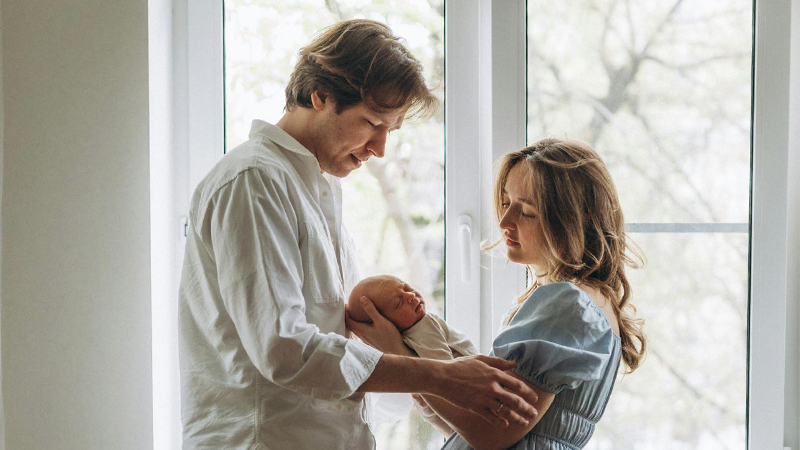
Recent figures show a heartening trend: more than half of children in England and Wales are now born to married parents. In 2024, 52% of live births were within wedlock, the highest proportion in over a decade. This marks a reversal after years in which out-of-wedlock births had become the norm. Any rise in babies born to a married mum and dad is welcome news for those of us who champion real marriage.
What’s behind this uptick? One key factor is changing demographics. The Office for National Statistics notes that births to non-UK-born mothers have been increasing. Many of these women come from cultures that strongly favour marriage before childbearing. For example, census data reveals that over 60% of Pakistani, Indian and Bangladeshi adults in Britain are married, compared to 43.5% of white British individuals. These communities also tend to have higher birth rates. In 2021, the average number of children per woman was about 2.03 for foreign-born mothers, versus 1.54 for UK-born mothers. In short, it seems that new immigrant families are contributing disproportionately to the rise in babies born to married couples. They are helping to shore up the conventional family unit even as it has weakened among the broader population.
Of course, we must view this news with nuance. The overall popularity of marriage in Britain is still at a modern low. For the first time ever, fewer than half of adults over 16 are married. Cohabitation and single parenthood remain common, and this small increase in in-wedlock births doesn’t yet mean a widespread cultural shift. In fact, the rise is at least partly driven by those communities that already value marriage highly. There are also stark regional variations. In parts of inner-city London, over 40% of families with children are headed by a lone parent, whereas in some more traditional or affluent areas, lone-parent families are under 17%. So while the 52% figure is encouraging, it comes with the reminder that much of our society still has a long way to go in rebuilding a marriage-centred culture.
Why does it matter that more children are born to married parents? Because a mountain of research shows that children generally thrive when raised by their married biological mother and father. Family structure isn’t just a private lifestyle choice – it has real impacts on life outcomes. A UK study by the Centre for Social Justice found that 70% of young offenders come from lone-parent families, highlighting the link between broken homes and youth crime. Similarly, international research has consistently found higher rates of adolescent delinquency among children missing at least one biological parent. Fatherlessness in particular is devastating.
On the other hand, children born to a married couple tend to have better outcomes on average – emotionally, academically, and financially. A recent study confirmed that kids born to married parents are more likely to be ‘on track’ in life by their teens, even after controlling for parental age and education. The reason isn’t mysterious: two committed parents (more likely with marriage) can simply provide more time, stability, and resources than one parent alone. In the words of the Institute for Family Studies, when it comes to giving children a good start, “two is better than one”.
Overall, this rise in wedlock births is a positive development for children and society. It suggests that even in a secular age, the benefits of marriage are shining through, at least in some segments of our nation. Children born to married mums and dads are more likely to experience the security of a stable home, which in turn sets them up for healthier, happier lives. As supporters of real marriage. We should celebrate this trend – but we also need to extend that culture to every part of Britain.
At C4M we don't just campaign for marriage-friendly policies – we also offer free, practical support through pre-marriage sessions, marriage refresher courses, and family conferences. If you’d like me to lead one of these events in your community or church, please do get in touch.